Glutathione is a (tri)peptide produced by the body itself, i.e. a small protein that occurs in high concentrations in almost all cells. It performs a great many extremely important functions in the human organism.
Because today's lifestyle involves many strains, the glutathione level is lowered in most people. Exhaustion, immune deficiency, inflammation and many diseases are associated with glutathione values that are too low.
An effective increase in intracellular glutathione values can therefore be of great medical benefit.
Simple glutathione oxidises quickly
The body's own glutathione (Fig. 1), as it is naturally present in the organism, is a “super molecule”. In order to exert its comprehensive health effect, it oxidises very quickly: it donates electrons to other molecules and is “used up” in the process. In its oxidised form, it is no longer available to the body.
Glutathione is needed above all inside the cells. If you want to raise this intracellular glutathione level, it makes little sense simply to supply reduced, “active” glutathione from outside (whether orally or by infusion makes no difference). This is because the reduced glutathione is destroyed, e.g. in the digestive tract and in the blood, before it reaches the cells. As a result, it loses its effectiveness and the intracellular glutathione level does not change substantially.
Experts agree that the glutathione level cannot be raised effectively with simple reduced glutathione.
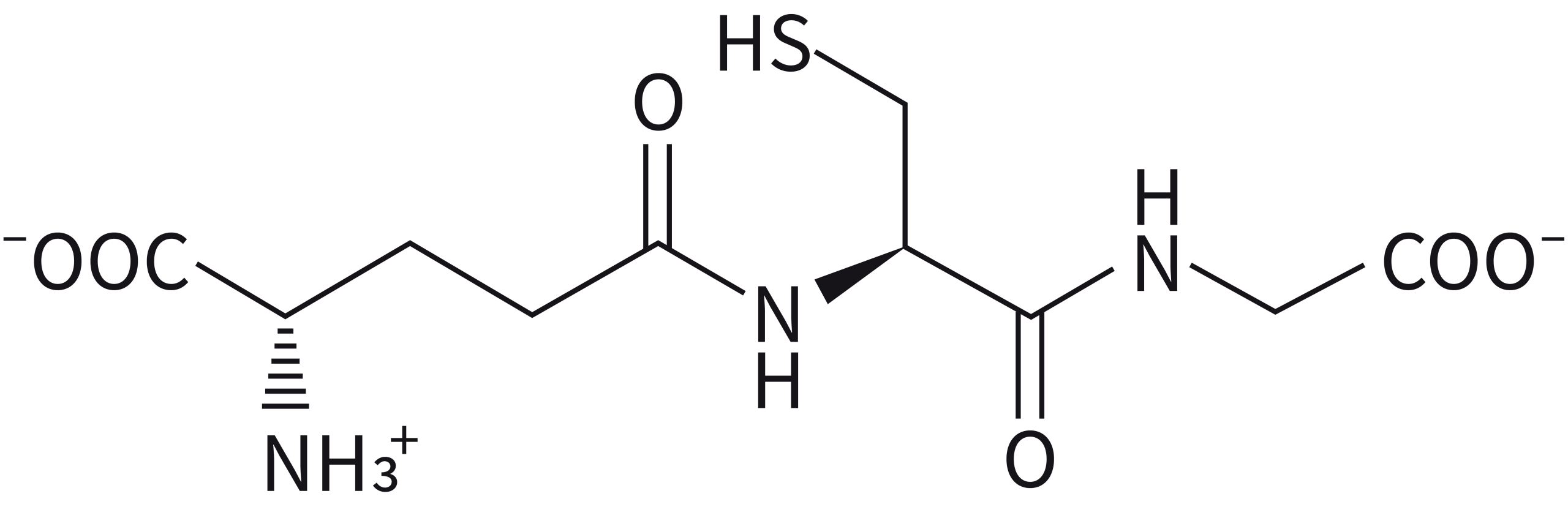
Fig. 1: Structural formula of reduced glutathioneReduced (“active”) glutathione. The readily binding SH group causes very rapid oxidation. With a half-life of 1.6 minutes, meaningful therapeutic use is not possible.
Effective: S-acetyl-glutathione according to Dr. med. Gerhard Ohlenschläger®
The solution to this problem is provided by the special active ingredient in Eumetabol®: SAG according to Dr. med. Gerhard Ohlenschläger®.
The biochemist and successful doctor developed a method of preparing reduced glutathione in such a way that it can be used meaningfully in therapy: he stabilised the molecule using a process called acetylation. The best-known example is acetylsalicylic acid (ASA, “Aspirin®”).
Acetylation protects the sensitive SH group in reduced glutathione (Fig. 2) in such a way that it only becomes active inside the cells. There, in the cell, enzymes ensure that S-acetyl-glutathione is converted back into reduced glutathione, which can now act optimally and at the decisive location.
S-acetyl-glutathione is the therapeutically effective form of reduced glutathione, because it is bioavailable.
Pharmaceutical active ingredient
In several stages, Dr. med. Gerhard Ohlenschläger® first developed the pure substance S-acetyl-L-glutathione from reduced glutathione and then the pharmaceutical active ingredient S-acetyl-glutathione (SAG). In this way he achieved two essential effects:
- As SAG, reduced glutathione is protected from oxidation on its way into the cell.
- SAG can pass through the cell membrane more easily than “normal” reduced glutathione.
The pharmaceutical active ingredient S-acetyl-glutathione according to Dr. med. Gerhard Ohlenschläger® reaches the interior of the cell safely and quickly.
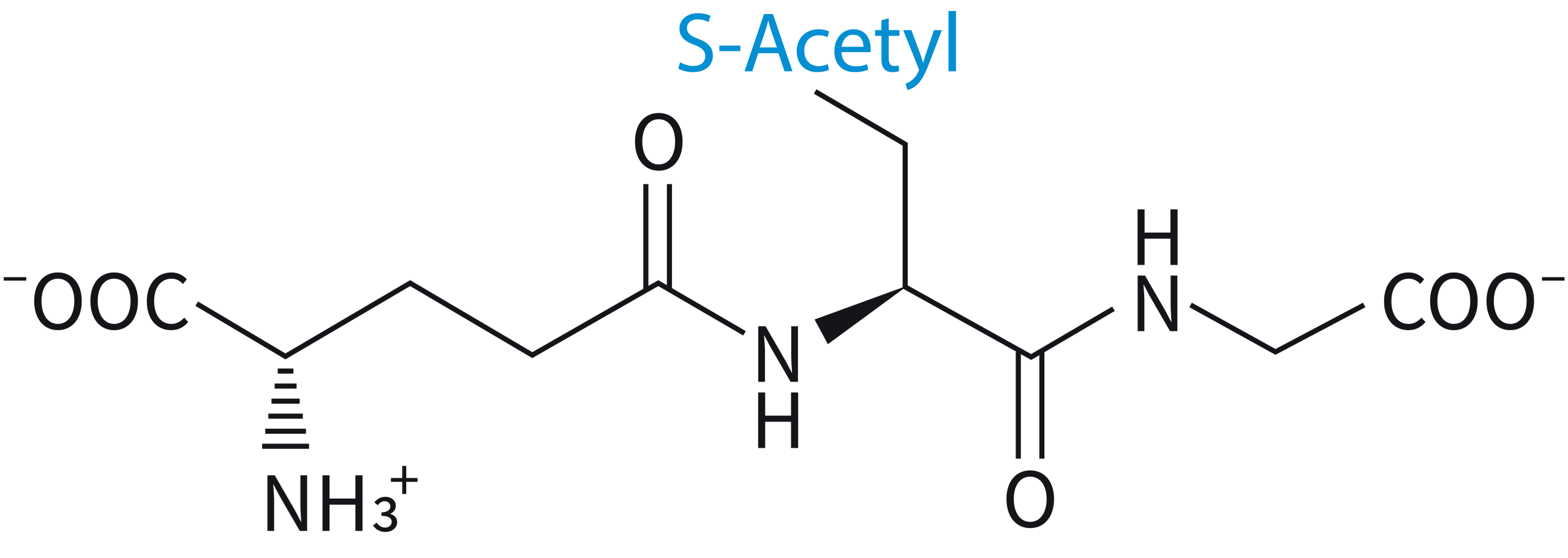
Fig. 2: Structural formula of S-acetyl-glutathione (Eumetabol®)S-acetyl-glutathione with protected SH group. The active ingredient can enter the cell intact and is particularly well absorbed by the cells. It is therefore optimally bioavailable. Successful therapy is possible in this way.
Advantages for therapists
Pharmaceutical preparation as S-acetyl-glutathione has decisive therapeutic advantages. It is therefore the demonstrably higher-quality alternative to other glutathione preparations.
When conventional reduced glutathione is administered, attempts are made to achieve an effect through extremely high dosage. However, this cannot succeed, because conventional reduced glutathione has an extremely short half-life (1.6 minutes). It oxidises before it reaches the cells and becomes bioavailable there.
SAG solves this problem as the most advanced active ingredient for the medically effective increase of glutathione values. Thanks to its special preparation, it is bioavailable and brings about the desired increase in active reduced glutathione inside the cells.
The effect of S-acetyl-glutathione according to Dr. med. Gerhard Ohlenschläger® can be demonstrated, e.g., by means of biomarkers of oxidative stress (e.g. isoprostanes, NF-κB).