
Glutathione: everything you should know
- Glutathione is vital
- What is reduced glutathione (GSH)?
- What is oxidised glutathione (GSSG)?
- The optimal ratio
- What are the consequences of glutathione deficiency?
- How can a low glutathione level be recognised?
- First signs of low glutathione values
- Reasons for an increased glutathione requirement
- Foods with a high glutathione content
- Which co-factors are important for a healthy glutathione metabolism?
- How the glutathione level is measured
- Glutathione: the right dosage, protection against overdose
- Glutathione: side effects and interactions
- Decisive in glutathione therapies: the highest active ingredient quality
Glutathione is vital
A human being consists of around 100 trillion cells. Almost every one of these cells contains the “mini-protein” (tripeptide) glutathione in high concentration. It is also found in considerably smaller quantities, e.g. in blood plasma and other body fluids.
The fact that glutathione is ubiquitous in the human organism shows how great a role it plays in health. For example, it is able
- to render free radicals harmless,
- to detoxify the body,
- to keep the immune system going and
- to maintain the energy level.
Normally every cell can produce glutathione itself by combining the three amino acids L-cysteine, L-glutamine and glycine. The most important site of production is the liver. Enzymes provide important assistance in the synthesis.
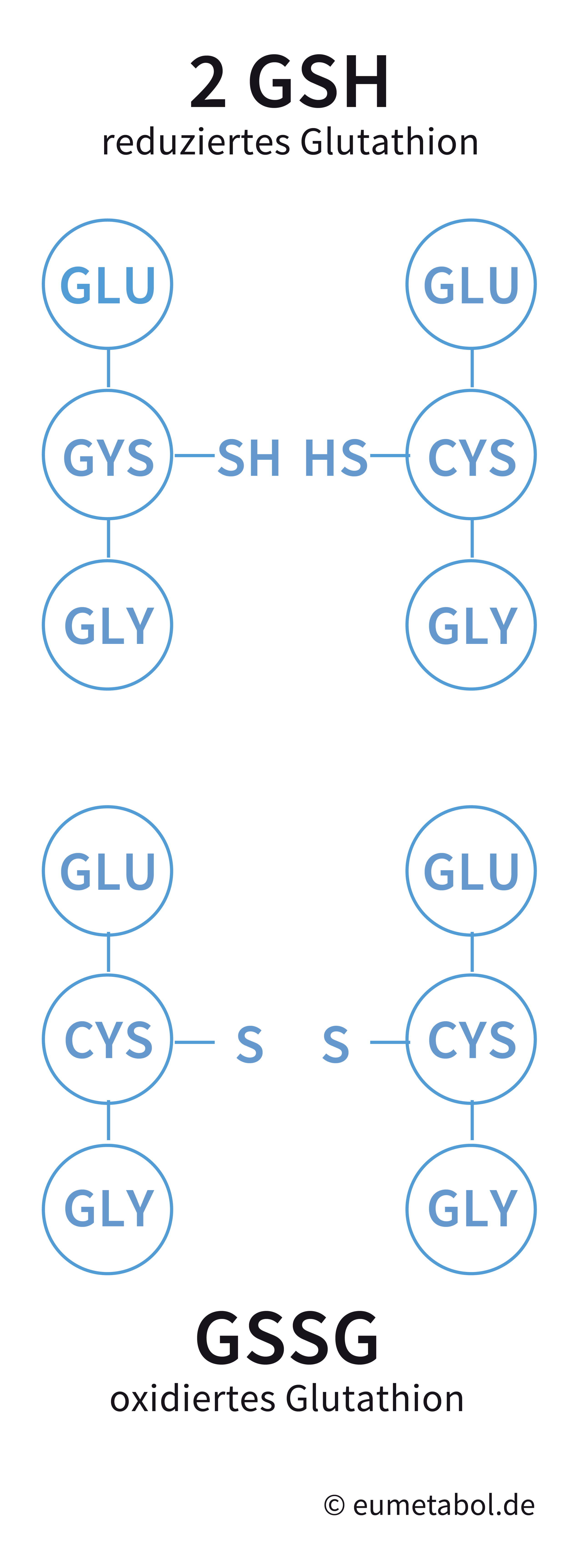
The body’s own glutathione occurs in two different forms: as reduced glutathione (GSH) and as oxidised glutathione (GSSG).
What is reduced glutathione (GSH)?
Important for the effectiveness of glutathione: only in its active form, as reduced glutathione, can the protein molecule donate an electron. This process is called oxidation. It is what makes the positive effects of glutathione in the organism possible in the first place.
Reduced glutathione oxidises extremely quickly; it has a “high antioxidant capacity”. In this way the body’s own glutathione acts as an antioxidant, as a detoxifying agent and as a supporter of the body’s defences. In addition, reduced glutathione is crucial for the provision of energy.
Once the glutathione molecule has donated the electron, it is “used up”, i.e. oxidised.
What is oxidised glutathione (GSSG)?
In its oxidised form, glutathione can no longer perform its functions. However, the body can “recycle” its own used-up glutathione so that it becomes active GSH again. This again requires enzymes, among other things.
For the recycling of oxidised glutathione, it is important that all body systems work together perfectly and are efficient and healthy. If this is not the case, glutathione deficiency results.
The optimal ratio
Because the glutathione system in the body is constantly working, the body’s own glutathione is always present partly as active GSH and partly as used-up GSSG. What is important for health is that the proportion of reduced glutathione in the body must be very much higher than that of oxidised glutathione. Only then can detoxification, the immune system, protection against free radicals and other important processes function. And only then can the energy level be maintained.
The normal, healthy ratio of GSH to oxidised GSSG is 400 : 1.
What are the consequences of glutathione deficiency?
If this healthy ratio of GSH to GSSG drops, impairments quickly occur. The risk of disease rises. A wide range of studies show that intracellular levels of reduced glutathione are lowered in a great many different clinical pictures. This association is particularly striking in
- COVID fatigue (e.g. as part of Long COVID)
- chronic exhaustion (CFS, chronic fatigue syndrome)
- cancer-related exhaustion (tumour fatigue)
- burnout
- other illnesses associated with exhaustion
- heavy metal exposure and the problems resulting from it
How can a low glutathione level be recognised?
However, low glutathione values are not only associated with serious illnesses, of which they are usually a consequence. A low glutathione level can also itself cause certain symptoms that make everyday life lastingly more difficult. This is because when the organism no longer has enough reduced, i.e. active, glutathione (GSH) available, important bodily functions are impeded:
- Cell metabolism is impaired.
- The immune system is weakened.
- Damage caused by oxidative and nitrosative stress can no longer be properly compensated.
A main symptom of low glutathione levels is a severe energy deficit. It is often combined with susceptibility to infections.
First signs of low glutathione values
You can recognise lowered GSH levels by the following possible symptoms:
- tiredness, exhaustion and lethargy
- frequent or prolonged infections, e.g. caused by viruses, bacteria, fungi
- increased occurrence of inflammation
- prolonged recovery time (convalescence) after infections
- decline in physical and/or mental resilience, e.g. lack of fitness, memory problems, concentration problems, general decline in performance
- depressive moods and/or mood swings
If low glutathione values within the cells can be raised effectively, the chance that these symptoms and complaints can be treated successfully increases significantly.
Reasons for an increased glutathione requirement
But how does an increased glutathione requirement arise in the first place? On the one hand, today’s living conditions play a role. Stress, increased physical or psychological strain, poor diet, sleep problems and too little sleep, and the consumption of stimulants such as alcohol or cigarettes cause more glutathione to be used up than the body can recycle. Taking medication and environmental toxins such as pesticides, air pollution or increasing UV exposure can also overwhelm the glutathione system.
Many of today’s living conditions intensify oxidative and nitrosative stress in the body. To compensate for these burdens, the glutathione requirement rises.
Foods with a high glutathione content
Even though the glutathione requirement cannot be met through diet alone, it nevertheless makes sense to support glutathione metabolism with a healthy lifestyle.
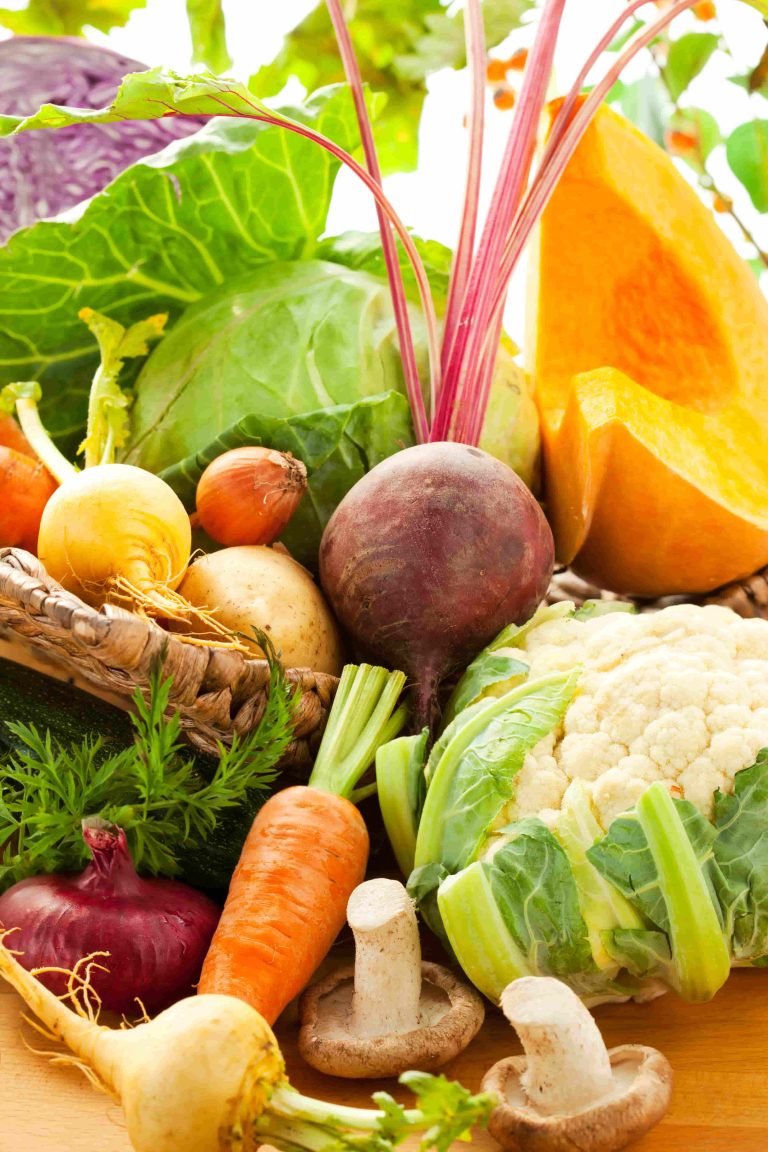
Some foods contain particularly large amounts of glutathione. Brewer’s yeast extract tops the list of glutathione-containing foods with a GSH content of 1%. Freshly slaughtered liver still contains approx. 0.7% reduced glutathione. Bought from a shop, after today’s usual transport routes, the liver already contains less glutathione: it then contains a maximum of 0.3% GSH. Other recommended foods are fresh ham, avocados, asparagus, watermelons, peanuts and other fresh vegetables.
Overall, however, it is assumed that with our present-day lifestyle we cannot take in sufficient reduced glutathione through our diet.
List of foods rich in glutathione
Here we have compiled a list of foods that contain comparatively large amounts of GSH. For most products: The fresher the food, or the more freshly cooked, the more glutathione it contains. Exception: asparagus and carrots, which contain more glutathione when freshly cooked than when raw.
- Brewer’s yeast extract
- Liver
- Beef muscle meat (also freshly cooked ham)
- Avocados
- Asparagus
- Watermelon
- Broccoli
- Potatoes
- Parsley
- Spinach
- Chicken
- Cauliflower (raw)
- Oranges
- Carrots
- Pumpkin (raw)
- Peppers (raw)
- Tomatoes (raw)
- Peanuts
Can you take in enough glutathione through food alone?
To cover the requirement for reduced glutathione through diet with today’s typical lifestyle, one would have to consume large quantities of the products mentioned. That is hardly achievable.
In addition, the glutathione content of fresh foods decreases significantly due to transport/storage times and preparation, as the GSH oxidises in the process and thus becomes unusable.
If the foods are also industrially processed, their glutathione content decreases further. Any remaining GSH possibly still contained in the product is then used up to render harmless the unhealthy additives and free radicals ingested with the food.
The glutathione level can only be raised effectively by Eumetabol® therapy, as only in this glutathione therapy is the GSH effectively protected against oxidation.
Which co-factors are important for a healthy glutathione metabolism?
So-called precursors and co-factors are also important for a well-functioning glutathione metabolism. The body needs these in order to produce and recycle GSH. Important precursors and co-factors are:
Precursor cysteine: as already explained above, glutathione consists of the three amino acids L-glutamine, L-cysteine and glycine. From these three components the body can produce glutathione itself with the help of enzymes. Cysteine in particular, however, is often not present in sufficient quantities. Although the body can obtain L-cysteine, e.g. by forming it from L-methionine or phenylalanine or by cleaving it from N-acetylcysteine, these synthesis pathways are also usually insufficient. This is referred to as a “limiting factor” for glutathione synthesis, i.e. for the formation of glutathione in the body.
Co-factors selenium and vitamin C: enzymes enable and accelerate the formation of GSH. For their work, the enzymes absolutely require so-called co-factors. During glutathione synthesis these bind to the enzymes in various ways and can also detach from them again. Vitamin C, sulphur and selenium, among others, are very important for GSH production. In cases of weakened immune defences, curcumin (from turmeric) and the essential amino acid lysine also support the (re)synthesis of GSH. Here, too, diet can have a supporting effect.
- Foods rich in selenium: redfish, cod, walnuts, wholemeal flour, brown rice, eggs
- Foods rich in vitamin C: rosehips, sea buckthorn juice, blackcurrants, peppers, broccoli, fennel, cauliflower, kiwis, strawberries, spinach
- Foods rich in lysine: pumpkin seeds, raw salmon, raw beef, dried peas, firm tofu, eggs, quinoa
Ideally, precursors and co-factors can support the body in producing glutathione.
Not useful: glutathione therapy via precursors and co-factors alone
Occasionally one reads of approaches in which glutathione values are to be raised by administering precursor substances/precursors or co-factors. Behind this lies the hope that the body can in this way produce sufficient glutathione itself.
In fact, however, it is never possible to determine exactly which enzyme or which component is needed individually for glutathione synthesis at any given time. It would be even more difficult to establish a possible dosage. This approach is therefore, as a rule, doomed to failure. As a sole therapeutic approach, precursors and co-factors are not relevant.
Nevertheless, the general importance of precursors and co-factors for glutathione synthesis is undisputed. That is why we offer not only highly effective S-acetyl-glutathione (SAG) of unique quality (Eumetabol®). In addition, Eumetabol® infusion formulations containing important supportive active ingredients are also available.
How the glutathione level is measured
We generally recommend laboratory monitoring of Eumetabol® cell therapy by measuring the glutathione level. At the start of therapy, the blood test serves to assess the following parameters:
- Current function of glutathione metabolism
- Performance of the antioxidant system
- Existing burden from free radicals (oxidative and nitrosative stress)
- Detoxification capacity of the body
- Required dosage of SAG
During therapy with Eumetabol®, measuring the glutathione level makes it very easy to track the improvement in glutathione values.
Glutathione diagnostics: what is tested?
Glutathione synthesis takes place mainly intracellularly. It is therefore crucial that the glutathione level within the cell is measured. In addition, GSH concentrations are considerably higher inside the cells than outside them, and are therefore more precisely measurable.
Measurement from EDTA whole blood is recommended. This is blood to which EDTA (ethylenediaminetetraacetic acid) has been added. This substance makes the blood incoagulable. Blood plasma, on the other hand, is not suitable for measuring the glutathione level, as glutathione is unstable in plasma and is broken down very quickly.
Even with good glutathione values, it can make sense to equip yourself optimally with low-dose Eumetabol® for stressful situations and against infections.
Accompanying glutathione diagnostics: values related to glutathione metabolism
In addition, it can be useful to obtain supplementary blood values. This allows the therapist to assess important interrelationships depending on the individual situation. The results allow additional conclusions about immune function, possible inflammatory reactions, toxin burden and/or energy status. These parameters include, among others:
- intracellular ATP (adenosine triphosphate)
- coenzyme Q10 (ubiquinone)
- ferritin
- folic acid
- homocysteine
- hs-CRP (high-sensitivity C-reactive protein)
- selenium
- vitamins B6, B12, C, D3
- zinc

The correct measurement of the intracellular glutathione level and accompanying laboratory values belongs in the hands of experienced specialists, in laboratories with appropriate equipment.
Glutathione: the right dosage, protection against overdose
Glutathione (Eumetabol®) should be dosed individually: in this way the effect is optimal at the lowest possible cost. The dosage is then determined on the basis of a blood test in which a specialised laboratory establishes the intracellular glutathione level (i.e. the amount of GSH within the cells). It may be useful to obtain accompanying parameters.
Glutathione infusions are particularly effective and practical: at a comparable dosage, the effect of an infusion sets in noticeably faster than with oral administration. At the same time, infusion appointments can be combined with blood checks. This saves time and money.
With Eumetabol® infusions, the therapist takes care of the individually optimal dosage. Patients neither need to remember to take anything themselves nor have to count tablets or capsules or measure out powder.
Glutathione: side effects and interactions
General side effects of Eumetabol® are not known; SAG is extremely well tolerated: after all, glutathione is a tripeptide that occurs naturally in the body and in almost all foods. Acetylation, as a proven pharmaceutical processing method, additionally protects the GSH in Eumetabol® against oxidation.
Furthermore, no negative consequences of a possible overdose of glutathione are known to date. Within the recommended Eumetabol® therapy, overdose is also prevented by the laboratory monitoring, because the individually correct dosage is calculated exactly.
- Please note regarding Eumetabol® infusions on an empty stomach: as some people find the rapid detoxifying effect strenuous when they receive the Eumetabol® infusions on an empty stomach, we recommend eating something before glutathione infusions are administered.
- Please note for people with allergies and intolerances: side effects can occur, e.g. in people with histamine intolerance. If you suffer from allergies or intolerances, please inform your therapist of this before starting therapy.
- Please note in the context of cancer therapies: supporting cancer therapies by raising glutathione values brings many advantages. However, owing to its high antioxidant potential, glutathione can reduce the effect of certain chemotherapies. In that case, after consultation with your therapist, Eumetabol® cell therapy at a staggered time is advisable.
For Eumetabol® therapy, neither general side effects nor interactions or overdoses are known. If you suffer from allergies or intolerances or are being treated for a serious illness, you should nevertheless talk to your treating doctor before undergoing glutathione cell therapy. In this way the best course of therapy can be found.
Decisive in glutathione therapies: the highest active ingredient quality
Glutathione supplied from outside cannot automatically take over the functions of the body’s own glutathione, because the body’s own glutathione acts mainly within the cells. Pharmaceutical processing of the active ingredient is therefore first necessary to enable a successful increase in intracellular glutathione levels and in this way achieve positive effects.
On the basis of this finding, the S-acetyl-glutathione (SAG) in Eumetabol® was developed: only this special pharmaceutical active ingredient ensures effective glutathione cell therapy.