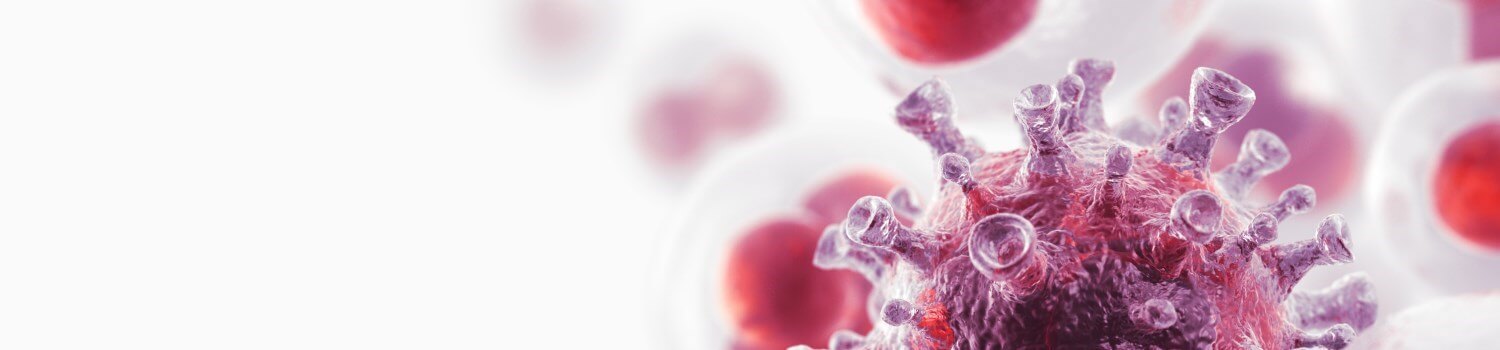
Headache, fever, a blocked nose, cough, feeling run-down: we know all of these as typical symptoms of viral infections. But it is not only colds that are caused by viruses. Viruses are also responsible for a great many childhood diseases, infectious intestinal diseases, and inflammation of the liver and of the meninges.
What exactly is a viral infection?
In a viral infection, a virus enters an organism and multiplies there; depending on the virus, very specific cells, organs or tissues are affected (e.g. eye, skin, stomach, intestine, upper respiratory tract, lungs). A healthily functioning immune system recognises the infected cells and ensures that they die. This normally involves an inflammatory response. Depending on where in the body this happens, the symptoms typical of the respective virus then develop.
The incubation period, duration and course of viral infections vary greatly. How long a person remains contagious with a viral infection also varies considerably.
Viruses use clever strategies
Viruses release their own genetic material in the host cells and integrate it into the genetic material of the host cell. In most cases, the host cell then produces countless new virus particles from which further viruses are assembled; this is known as viral replication. The exhausted host cell then dies. The viruses released in this way infect further cells of the host.
An important aim of treatment for viral diseases is to inhibit viral replication.
Which viral diseases are there?
There are countless viruses and just as many clinical pictures caused by them. Here are some examples:
- SARS-CoV-2 coronavirus: COVID-19
- Dengue virus: dengue fever, seven-day fever
- Epstein-Barr virus: various EBV infections
- TBE virus: tick-borne encephalitis (early-summer meningoencephalitis), meningitis
- Yellow fever virus: yellow fever
- Hepatitis C virus: hepatitis C
- Herpes simplex virus: cold sores, genital herpes
- Human immunodeficiency virus (HIV): AIDS
- Influenza virus: flu
- Condyloma virus: genital warts
- Measles virus: measles
- Mumps virus: mumps
- Rabies virus: rabies
- Rhinoviruses: colds, runny nose
- Rotavirus and norovirus: gastroenteritis
- Rubella virus: rubella (German measles)
- Varicella zoster virus: chickenpox, shingles
- Zika virus: Zika fever
Studies demonstrate the influence of glutathione in viral infections
Research demonstrates the link between an intracellular glutathione deficiency and increased viral replication. At the same time, it has been shown for various viruses that the active substance S-acetyl-glutathione in particular prevents viral growth and the survival of viruses in the body. In addition, high intracellular glutathione levels support a healthy immune balance. Studies have confirmed these mechanisms for, e.g.:
- SARS-CoV-2 coronavirus
- Hepatitis C viruses
- Herpes simplex viruses type 1
- HIV-1 and other retroviruses
- Influenza and parainfluenza viruses
- Rhinoviruses
- Sendai viruses
What helps against a viral infection?
A healthy lifestyle generally strengthens a weak immune system and thus also protects against viral infections. A good supply of nutrients, stress reduction, exercise and abstaining from nicotine and alcohol are important. A further role, which can hardly be overestimated, is played by a well-functioning glutathione system in the body.
Low intracellular glutathione levels should always be corrected, because a glutathione deficiency can promote viral and other infections.
What helps with complaints after a viral infection?
It has long been known that viral infections can result in late effects such as severe exhaustion. This is particularly striking after infections with the SARS-CoV-2 coronavirus. Even after mild courses of the disease, consequential damage can occur, including persistent respiratory problems, cardiovascular diseases, joint and muscle pain, or even diabetes. Particularly striking, however, are the long-lasting weakness, lack of drive and tiredness, similar to chronic fatigue syndrome. Studies assume that a high percentage of all COVID-19 patients are affected by such a “post-COVID syndrome” or “Long COVID”. Many of those affected are then no longer able to carry on with their usual activities.
Glutathione therapy offers an optimal way of acting at several points simultaneously in order to relieve chronic complaints after infections or to prevent them from developing in the first place. Various mechanisms interlock in this process.
How does the S-acetyl-glutathione in Eumetabol® work in viral infections?
Healthy intracellular glutathione values are crucial for the body to be well equipped against viruses and against possible post-viral complaints:
- The entry of different virus strains into the body cell, and thus infection, is inhibited.
- The “identification” of the viruses by the immune system is supported.
- Viral replication in the body is significantly impeded. The viral concentration falls.
- Immune balance is promoted. This allows the body to initiate precisely the defence reactions that are needed for the particular pathogen.
- Oxidative stress, which arises during viral replication, is reduced, thereby promoting healthy cell metabolism. This can also relieve the symptoms of the disease.
The specially prepared S-acetyl-glutathione (contained exclusively in Eumetabol®) is optimally bioavailable and has been shown to increase intracellular glutathione levels. Eumetabol® thus ensures an effective defence. It fights viruses directly. And it relieves the effects as well as the late effects of viral infections.